How to bring your hiking snack game up another level
By Jacey Gibb, Distribution Manager
Great Inclinations is your go-to source for diving into the world of casual hiking in and around the Lower Mainland. Because hiking’s not just for assholes anymore.
One of the best parts about hiking, camping, or doing anything outdoors is the amount of snackage that occurs. You’re roughing it; you’re burning through calories like they’re on fire; it’s easy to justify nearly any level of snack to yourself. However, not every hiking snack is created equal, and what food you bring will depend on what kind of hike you’re on. Here are a few tidbits to help you dazzle everyone with your new and improved snacking A-game.
First off, the kind of food and accompanying devices will depend on what kind of hike you’re going on. Snacks for a casual jaunt up Quarry Rock are a lot different than what you’d bring on a day-long hike in Whistler. It’s also better to overestimate when you’re packing, since you can’t really swing by a McDonalds when you get the munchies and you’re stuck on top of a mountain. Think ahead and avoid being that person who ends up bumming off everyone else’s snacks.
In terms of gear that can help you become a snacking guru, cooler bags are a new addition to my life, and it’s hard to remember a time before them. Add a few reusable ice packs, and you’ve got a compressible fridge that’s easy to transport and that retains cold fairly well. Cooler bags are handy even if your snacks don’t necessarily need refrigeration: They prevent stuff from melting in your pack, or they can keep other foods slightly chilled. They’re also relatively inexpensive—most range from $15 to $50—but the branded ones that often come with packs of beer will do just fine.
It’s also worth investing in some decent plastic Tupperware and durable elastic bands. Glass jars and containers might seem like the stronger option, but they weigh a lot more and can break in your backpack. Load all of your food into Tupperware containers, and either wrap them in elastic bands or plastic wrap to prevent any spillage.
Another important thing to remember is that preparing food for a hike is always full of trade-offs. You could buy a ton of dehydrated food from Mountain Equipment Co-op, which is light to carry and conveniently premade; however, most dehydrated meals cost about $14 each, and some of them taste like soapy vomit. You could prepare a few meals ahead of time and pack them in Tupperware containers, but they’ll likely be heavy in your pack and might pop open during the hike. Think about what’s important to you—are you more concerned about being thrifty, being satisfied, or being light on the trail? Pick snacks and meals that line up with those values.
Personally, my snacking game is all over the place, but it works for me. Here are a few favourites for taking on the trail:
Hard-boiled eggs
They’re easy to make, delicious, and chock-full of calories, protein, and fat. Make sure you have some experience peeling these bad boys before bringing them on a hike though, as some people find them difficult to peel and end up pulling them apart completely.
Frozen grapes
Pop ’em in the freezer the night before, and you have a tasty cold treat that also keeps your other snacks chilled. I prefer the sweetness of red grapes, but any kind works here.
Quinoa salad
As long as it doesn’t have dairy in it, quinoa salad can be enjoyed at any temperature. Batch cook a ton so you have leftovers, and then pack a Tupperware full of it for the hike. (Just don’t forget to bring spoons!)
Chickpea wraps
Probably my go-to on-the-go snack. Chickpeas are brimming with calories and carbohydrates, and their flavour is so mild that you can do anything with them. Load a tortilla wrap up with hummus, spinach, and some kind of mashed chickpea filling, and you’ve got a meal on the go. For a good example of these check out the Other Press’ recipe “Meatless Monday: Vegetarian chickpea wraps.”
Vegetables
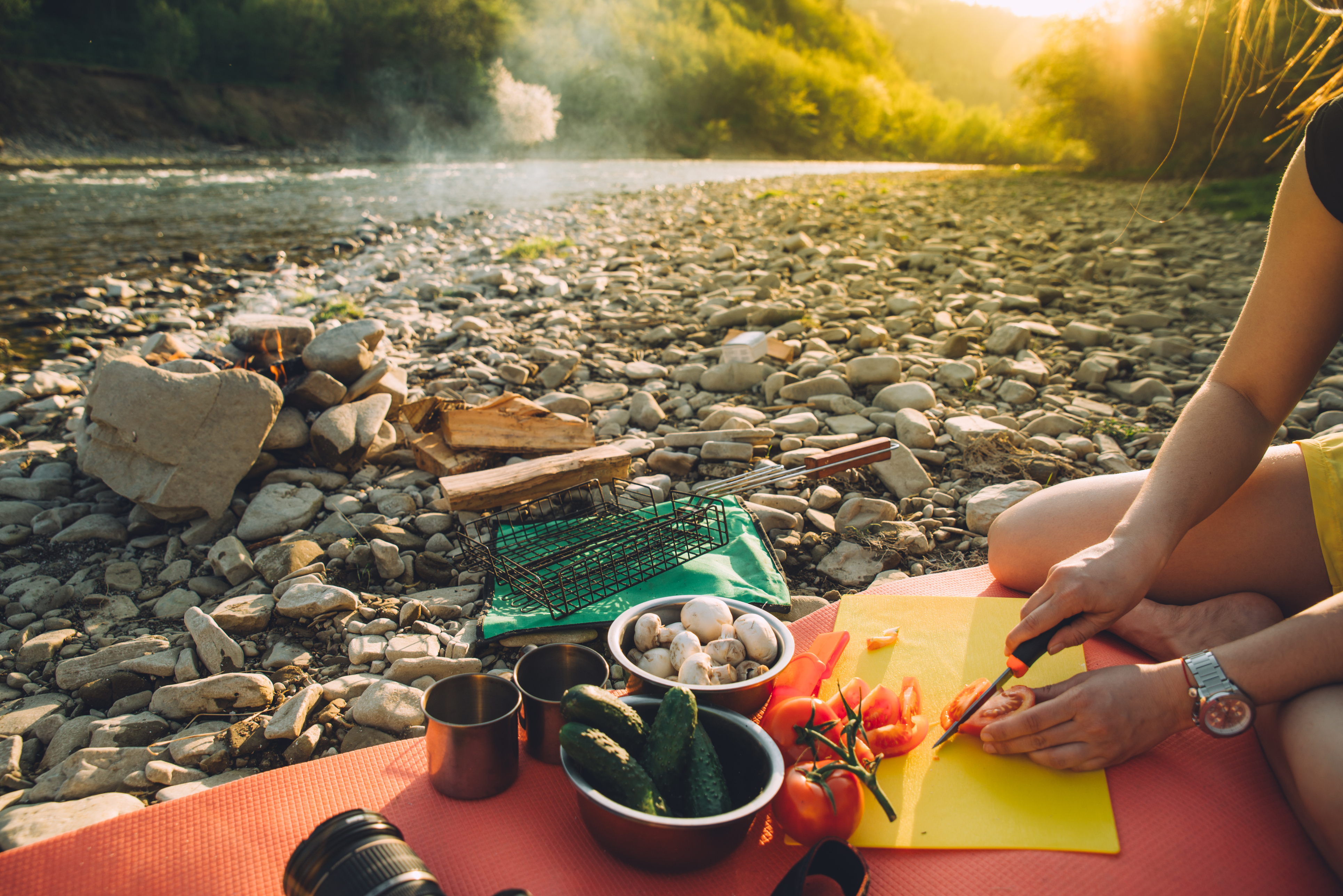
I love fruit, but most of them either bruise too easily or are a high risk for getting smashed in a backpack. Hikes are where vegetables shine: Pack a container full of prepared vegetables—carrots, cucumbers, grape tomatoes, broccoli, radishes—and enjoy the convenience of easily-accessible, fresh veggies throughout your hike.