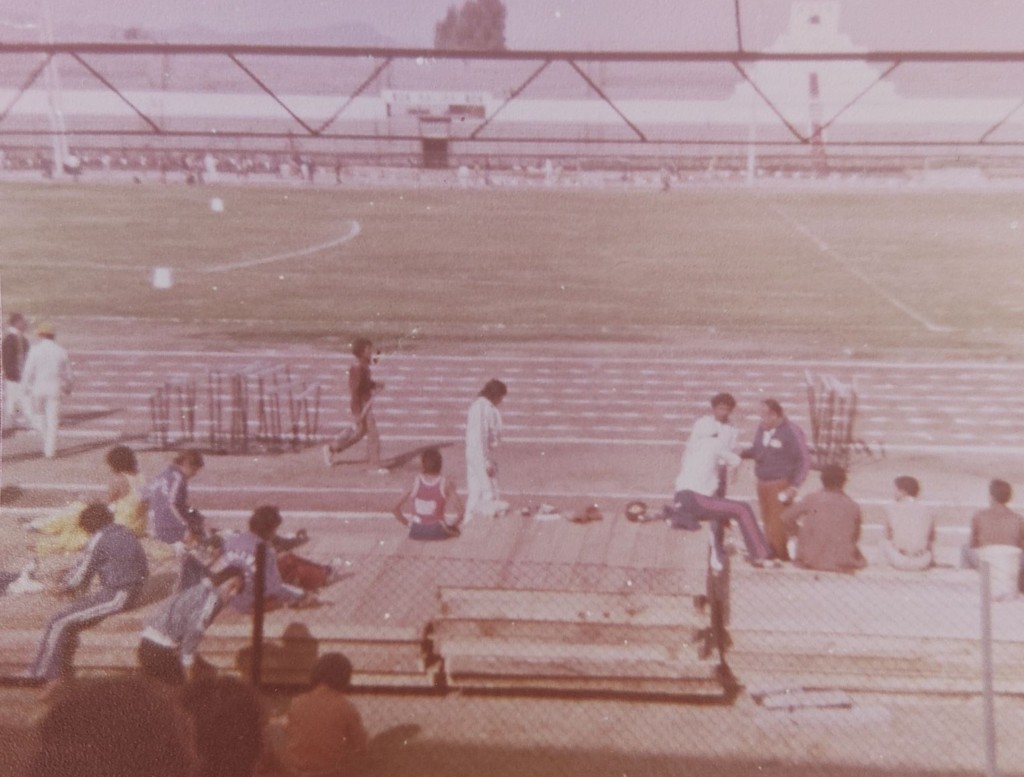
Before Canadians became familiar with sprinter stars like Donovan Bailey and Andre De Grasse, Harry Jerome emerged as one of Canada’s greatest sprinters.
Harry Jerome endured hardship to become one of Canada’s greatest sprinters
By Brandon Yip, Senior Columnist
Harry Jerome spoke with the CBC in July 1960, during the Canadian Olympic trials in Saskatoon. He had just run the 100-metre dash in 10 seconds, equaling the world record set by German sprinter, Armin Hary, one month prior. Jerome was revealed to be a man of few words. But he had already spoken with his actions on the track. Before Canadians became familiar with sprinter stars like Donovan Bailey and Andre De Grasse, Harry Jerome emerged as one of Canada’s greatest sprinters. This year marks 40 years since his sudden death at age 42.
Jerome was born in Prince Albert, Saskatchewan on September 30, 1940. He moved with his family to the Vancouver area in 1951. Unfortunately, the Jerome family was not immune to racial discrimination and abuse. According to a Global News report in June 2020, Jerome, on his first day at Ridgeway Elementary in North Vancouver, fled after other kids in the schoolyard threw rocks at him. Jerome’s sister, Valerie, a former Olympic track athlete, was with her brother and confirmed the incident during a February 2021 interview with CBC News: “Our first day of school was a nightmare—the rocks that rained down on our faces, our heads, our backs—and it wasn’t 10 or 15 children, it was more than 100, maybe even 200. They were ready for us that morning because their parents were already frustrated we had moved onto the street.” The racist abuse increased after the Jerome family attempted to move into a North Vancouver neighbourhood; people in the area petitioned against it until the family eventually left.
Nonetheless, Jerome would develop in athletics while attending North Vancouver High School. He played numerous sports: baseball, football, hockey and rugby. But it would be in track and field where his greatest talent and skill emerged. Notably, Jerome, at age 18, broke a 31-year-old record in the 220-yard sprint, previously held by 1928 double Olympic gold medalist Percy Williams. Then Jerome’s triumph in Saskatoon in July 1960 at age 19, equaling the world record—after running the 100-metre dash in 10 seconds. The achievement was acknowledged by the Canadian media. The Globe and Mail reported after the historic race, “Harry Jerome’s Mark Goes in Record Book,” and wrote the “19-year-old Vancouver sprinter became the first native Canadian to hold, officially, a world track record.”
Unfortunately, such praises for Jerome would only be temporary. Some Canadian sports journalists questioned Jerome’s mental toughness and resolve—insinuating that he was unable to handle the pressure during big moments. In 1962, he suffered “…what was considered a career-threatening injury, completely severing his left quadriceps muscle,” as reported by Global News. According to journalist Brian Pound, the press was not kind to Jerome. “The media were all over Harry, calling him a quitter,” he said.
Valerie Jerome was astonished by how much disrespect her brother received in the press. At the 1960 Olympics in Rome, he received criticism from reporters after he injured his hamstring during the 100-metre semifinals (forced to pull up during the race). “When the second injury happened, the [Vancouver Sun] headline was Jerome Quits Again,” she told the North Shore News in February 2021. She added that after her brother’s death, the criticism continued: “When he died in 1982, [Maclean’s magazine] ran his obituary: ‘and Harry Jerome ignominiously withdrew from his semifinal in the Rome Olympics.’ I don’t know what’s so shameful and embarrassing about being injured. […] He was an extraordinarily determined person, but no, that isn’t what many people remember. They seem to think that he quit.”
However, Jerome answered his critics once again with his actions on the track. It is considered one of the greatest comebacks in track and field history. After his serious left quadriceps muscle injury, Jerome trained and competed at the 1964 Olympics in Tokyo—winning a bronze medal in the 100-metre race. Other victories included winning gold medals at the 1966 British Empire and Commonwealth Games and 1967 Pan American Games (both in the 100-metre race). During his racing career, Jerome set seven world records. He retired from international competition at the end of the 1968 season.
Jerome was inducted into the BC Sports Hall of Fame in 1966 before receiving the Order of Canada in 1970. The following year, he was inducted into the Canadian Amateur Athletic Hall of Fame, Canada‘s Sports Hall of Fame and named BC’s Athlete of the Century. According to the official Harry Jerome International Track Classic website, in retirement, Jerome remained a positive role model and inspiration for Canadians while working in the Federal Ministry of Sport. Jerome later developed the BC Premier’s Sports Awards Program, encouraging young people to stay active and be goal-setters in accomplishing their dreams in athletics. On December 7, 1982, Jerome passed away at age 42 from a brain aneurysm.
Significantly, the Harry Jerome International Track Classic has been held annually in his honour since 1984. Another tribute was the unveiling of a special nine-foot bronze statue inside Stanley Park in 1988. The bcblackhistory.ca biography about Jerome and the statue states, “The statue stands a few hundred metres from Brockton Oval where Jerome trained for the world records he set and the medals he won.” Certainly, Harry Jerome’s accomplishments left their mark. Indeed, he was anything but a quitter.