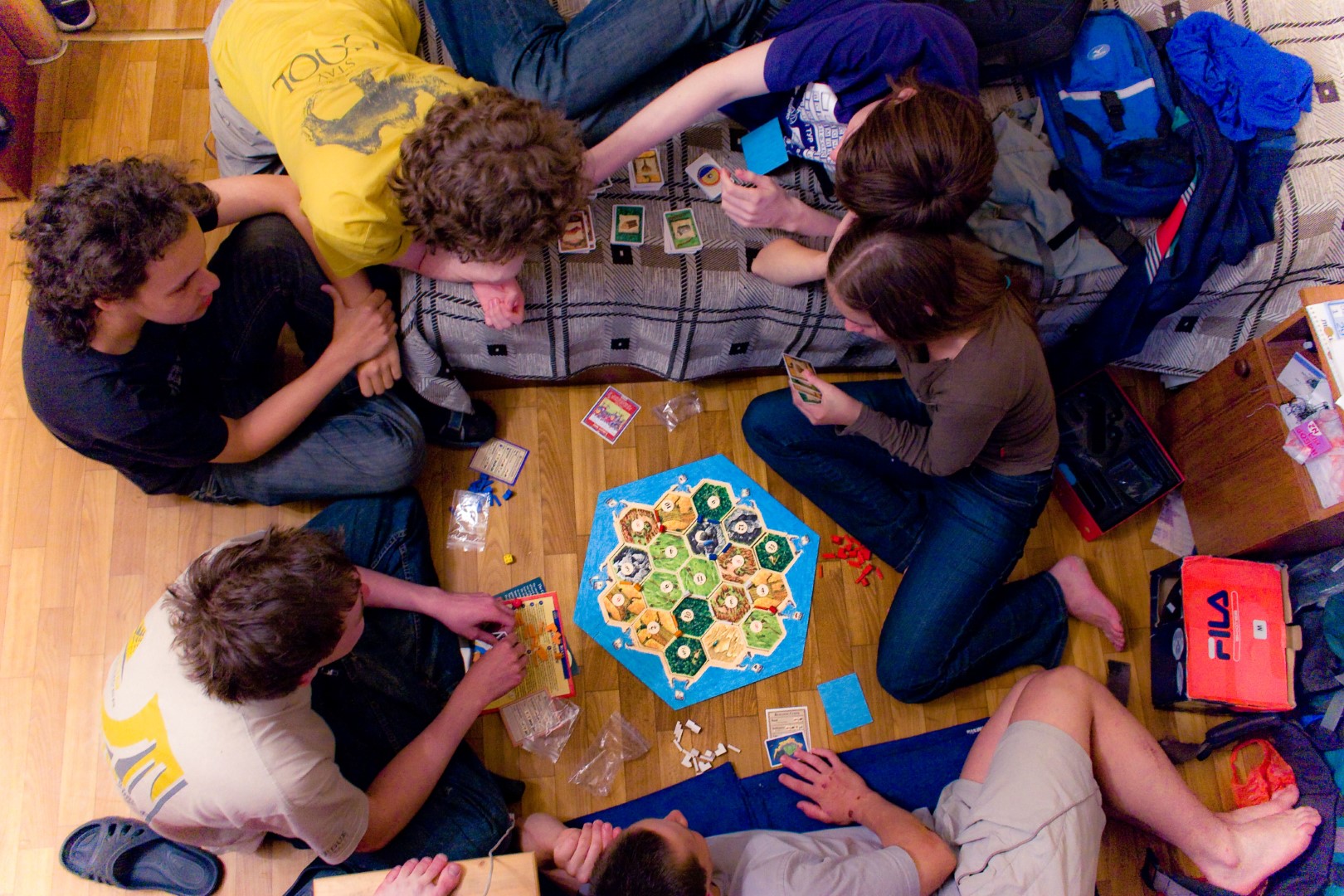
Board game etiquette and making it fun for everyone
By Caroline Ho, Assistant Editor
As far as social activities go, board games can definitely be a blast. Of course, they do require you to first pick up on the rules of the game—and some rules of behaviour.
Disclaimer: I’ve tried my hand at a share of board games but I’m definitely no connoisseur, nor do I have a dedicated group with whom I play regularly. However—and perhaps because my board gaming tends to be spread out across several social circles—I like to pretend I’m familiar with some basics of social interaction and tabletop etiquette that sometimes seem to get lost when you’re in the icy depths of cutthroat competition.
Second disclaimer: Please keep in mind that the guidelines below are suggestions and very situationally dependent. What is appropriate in terms of competition depends a lot on group dynamics, the age and relationships of the players, and the nature of the game itself. Do you and your fellow players prioritize competitiveness or casual fun? Do you value your friendship over the sweet, sweet glory of merciless victory?
Stay engaged and keep others engaged
Having a single person at a table who is clearly not into a game can bring down the entire mood. If you’ve got one or two players who are barely paying attention, picking up the dice for a perfunctory roll on their turn, then going right back to scrolling through their Twitter feeds, it’s disrespectful to those who are actually engaged and trying to enjoy this as a group activity—so don’t be that person.
At the same time, it’s hard to have fun when you’re losing horribly and seem to have no chance of catching up. This situation can be hard for other players to prevent, but at least try not to gang up on someone too badly unless you’re sure they can take it. If you’re in the lead yourself, keep the gloating to a sufferable level and don’t get too upset if everyone suddenly turns on you. It’s healthy competition, not a personal attack.
Respect the game
This should be embarrassingly obvious, but I think it’s also important enough to state anyway. Please do not bend the cards. Please do not spill water on the gorgeously illustrated board. Please do not spread your pizza grease stains and chip dust all over the painfully expensive playing pieces.
Don’t be too nice
The goal of every board game out there is to win—and if you’re not trying to do that, or you’re otherwise skewing the competition, what’s the point?
It’s really frustrating to play in a group when one player is explicitly going out of their way to be extra-nice to another—especially with significant others. Informally teaming up for mutual benefits is one thing; refusing to make any move that would negatively affect your SO because you don’t want to hurt their feelings, even when it’s strategically the best move, is another beast entirely. This favouritism is unfair to the other players and patronizing to your own partner.
There are two sides to this scenario however: Don’t give special treatment to your own partner, but also don’t expect any special treatment from them and throw a hissy fit if they don’t give it to you. Winning by your own merit (or at least the whims of RNG) is more satisfying for everyone.
Know when to call it quits
Even the most patient group has its limits. Sure, finally reaching a gruelling victory according to the as-written win conditions can be so satisfying. But what’s the point of continuing to play if no one is still having fun after you’ve been at it for seven hours and everyone’s tolerance with one another has worn down to nothing?
Don’t be afraid to call it a day early and set an end point to the game—say, if no one’s won within the next two turns or next 10 minutes, the player who’s winning at that time will be declared victor. Or just call it a draw and agree it’s been a well-fought match. As long as the call to end prematurely is a group decision, then the real victory is getting to go home without resenting your fellow players this time.
